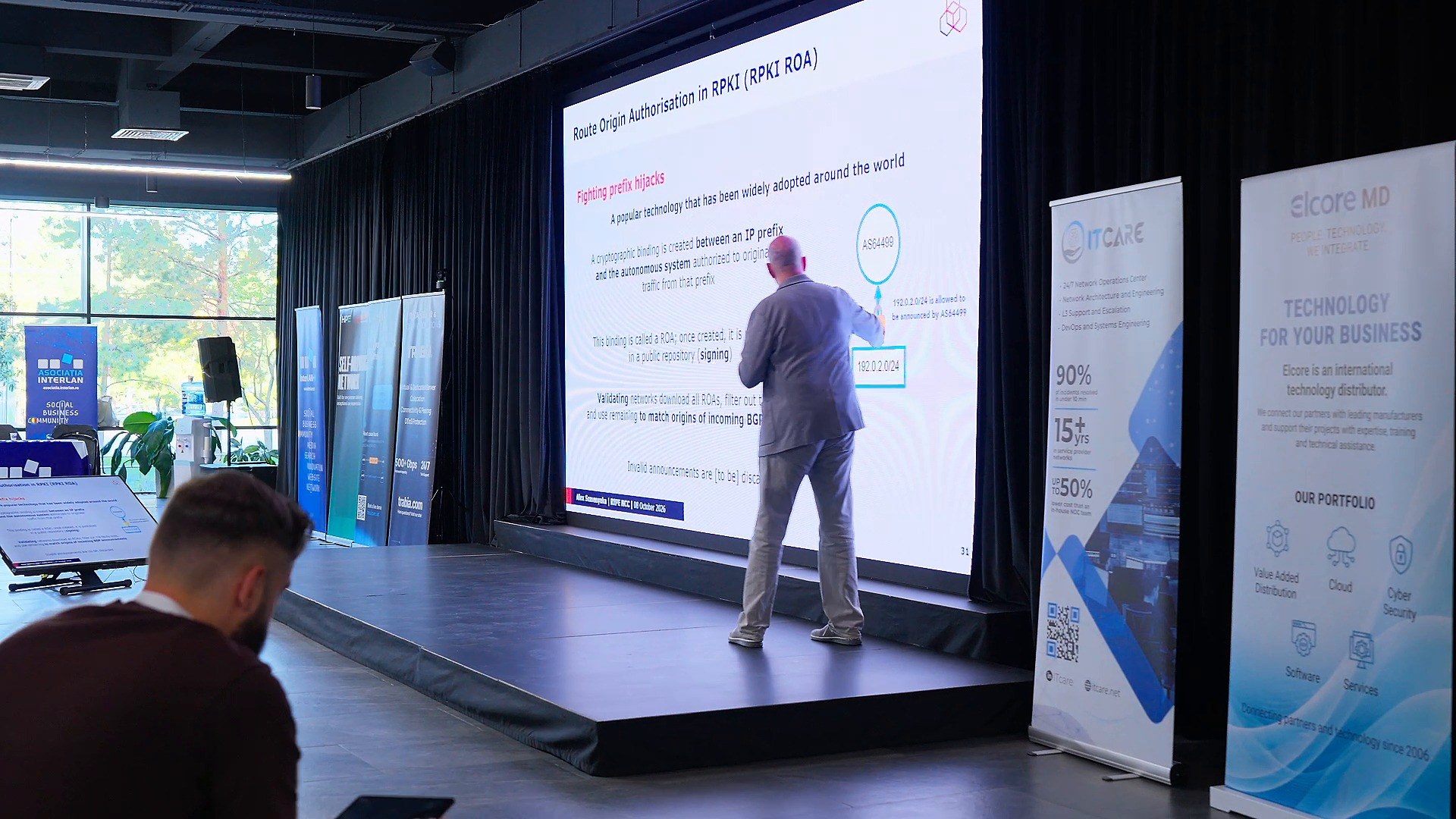
RSI (Remote Simultaneous Interpretation) is the technique where interpreters translate live but are not physically present in a booth at the event venue — they work remotely, through a dedicated interpretation platform connected to the event’s audio and video feed.
How it differs from on-site interpretation
In on-site interpretation, interpreters work from physical booths in the room, listening directly to the speaker. With RSI, interpreters listen and translate through a remote connection — from home, a dedicated hub, or an office — and the translation reaches participants through the same channels as a standard event (receivers in the room, or directly through the online platform for remote participants).
When it makes sense
RSI is particularly useful for:
- Fully online events, where there’s no physical room for booths;
- Hybrid events, where online participants need the same interpretation as those in the room;
- Rare languages or specialized interpreters who aren’t available locally — RSI allows access to interpreters from anywhere;
- Tight budgets or timelines, where flying interpreters in isn’t feasible.
What it takes technically
A working RSI setup needs:
- a remote interpretation platform that distributes language channels to participants;
- a stable internet connection for interpreters, with a backup, since interruptions directly affect translation quality;
- integration with the in-room system (for hybrid events), so in-room participants receive the same interpretation through their regular receivers;
- interpreters with specific RSI experience — remote interpreting has different challenges than a physical booth (no direct eye contact with the speaker, received audio quality).
Why connection quality matters
Unlike on-site interpretation, where the interpreter hears the room directly, RSI routes everything through a digital connection. High latency or an unstable connection directly affects translation quality — which is why we always test the connection and have a backup plan before the event.
Planning a hybrid or fully online event? See how we integrate RSI into hybrid events or request a quote.