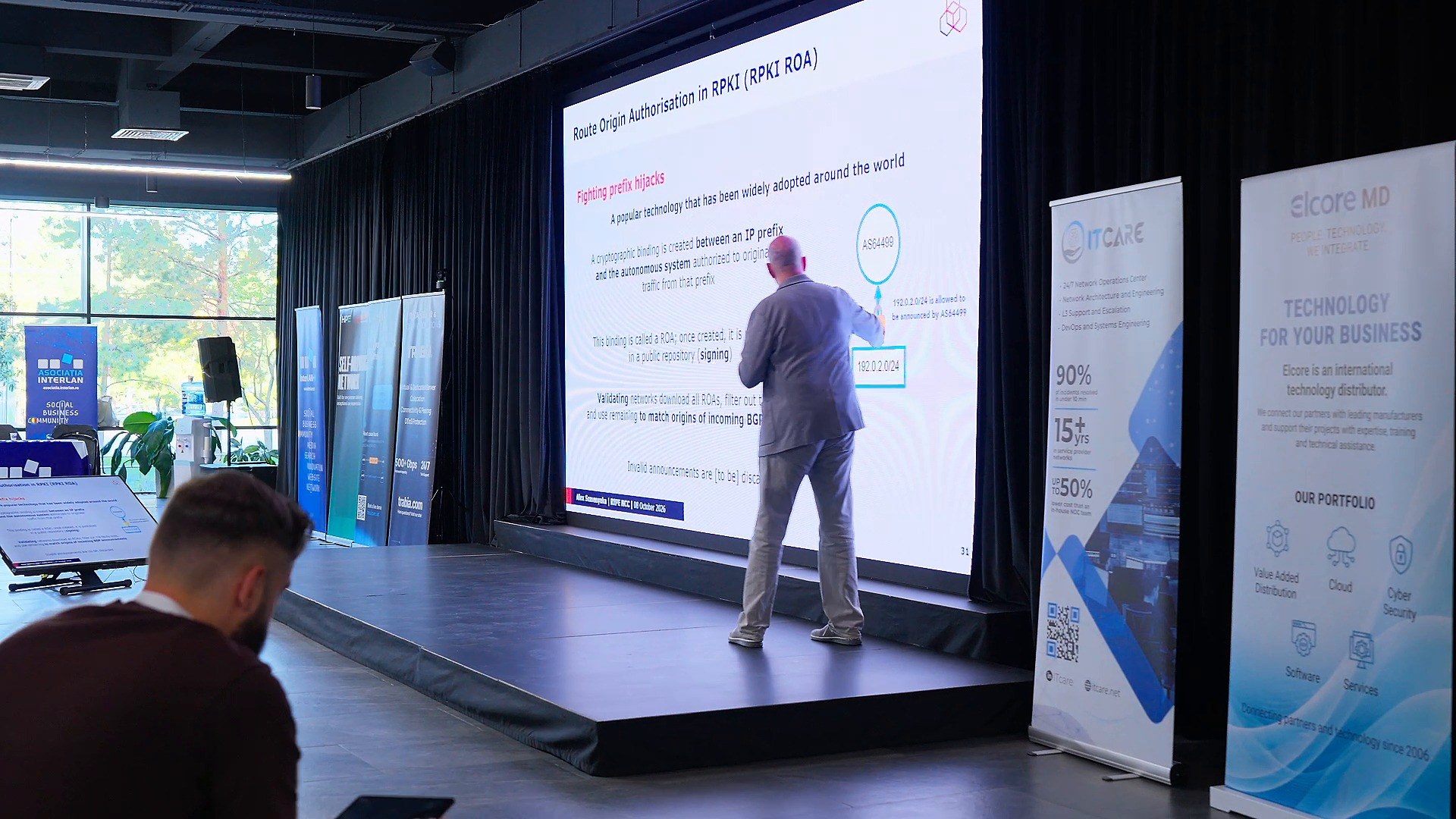
In a room with delegates from eight countries and four working languages, the first speaker starts — and within seconds, everyone is already listening in their own language. No one waits, no one interrupts. That’s simultaneous interpretation working the way it should.
From the floor, it looks effortless. It isn’t. Behind each booth, trained interpreters listen to one language and speak another at the same time, continuously, for minutes on end. Understanding what that process involves — and the equipment behind it — helps you plan a multilingual event without surprises.
What simultaneous interpretation is
Simultaneous interpretation is the real-time spoken translation of a speech from one language into another, with a delay of just a few seconds behind the speaker. Unlike consecutive interpretation — where the speaker pauses and the interpreter takes over — the speech never stops here. Participants listen to the translation through headsets while the speaker continues uninterrupted.
It’s the standard method at international conferences, parliamentary sessions, shareholder meetings, or corporate events with a multilingual audience, because it keeps the natural rhythm of the discussion intact.
How interpreters actually do it
Listening and speaking at the same time, in two languages, on technical subjects, is one of the most demanding cognitive tasks there is. Interpreters don’t translate word-for-word in real time — they hear a chunk, grasp the meaning, then render it in the other language while already listening to the next chunk. It’s rapid attention-switching rather than true parallel processing, and it takes years of practice to sustain at a professional level.
That’s exactly why an interpreter never works alone for a long session.
Why interpreters always work in teams
Industry standard practice — backed by professional bodies like AIIC (the International Association of Conference Interpreters) — calls for a minimum of two interpreters per language pair, alternating every 20-30 minutes. Beyond that threshold, cognitive fatigue starts affecting accuracy and vocabulary.
For a full-day conference with three working languages, that means a minimum of six interpreters in practice, not three. It’s a detail many organizers underestimate when budgeting — and one of the reasons we coordinate the interpreter team, not just the equipment.
The equipment behind simultaneous interpretation
Four components make the system work:
Interpretation booths. Interpreters work sound-isolated, either in fixed booths built into the venue (ISO 2603 standard — used for institutional/EU-level events) or mobile booths brought in for the event (ISO 4043 standard). Positioning matters: interpreters need a clear view of the speaker and the projection screen, or quality suffers regardless of the equipment.
The interpreter console. Inside the booth, each interpreter has a console with a microphone, headset and channel selector, used to monitor the room’s audio and deliver the translation.
Audio distribution to participants. The translation reaches each delegate through a personal receiver and headset — we use Williams Sound receivers, on radio frequency rather than infrared. The difference matters: RF signal doesn’t need a direct line of sight to the transmitter, so it works well even in large rooms or with visual obstructions. For meetings where confidentiality is critical, infrared remains the right choice, since the signal doesn’t pass through walls.
Speaker microphones. Interpreters can only translate what they hear clearly. In a room without proper sound reinforcement, or in a multi-speaker panel, insufficient microphones undermine the entire setup, no matter how good the rest of the equipment is.
With the Bosch DICENTIS system we use, a single setup covers up to 32 simultaneous language channels — enough for most multilingual conferences.
Simultaneous, consecutive, whispered, or relay
Simultaneous interpretation isn’t the right fit for every situation. There are four main forms:
- Simultaneous — for any event where an uninterrupted flow matters: conferences, panels, large assemblies. It requires the most equipment and the largest team, but remains the most cost-efficient option per hour at long events, since it doesn’t extend the schedule.
- Consecutive — the speaker pauses, the interpreter delivers the message. No equipment needed, but it doubles the time of every intervention — suited to short speeches, bilateral negotiations, or press interviews, not a full day of conference.
- Whispered (chuchotage) — the interpreter whispers the translation directly to one or two participants. No equipment, but physically demanding and limited to very small groups.
- Relay — for rare language combinations: one interpreter translates into a pivot language (usually English or French), and a second interpreter takes it from there into the final target language.
For small groups (2-3 people) who need just one rare language, we also offer an additional option: real-time AI translation, integrated directly into the same Williams Sound receivers.
Who actually needs simultaneous interpretation
The threshold is lower than most organizers assume. A meeting with 15 people and two working languages benefits just as much as a 500-seat plenary — and the cost per participant drops as numbers grow.
It makes sense for: organizations and institutions with international activity, companies with multilingual teams, conference organizers with a diverse audience, and public institutions with language-access obligations.
How to choose the right setup
Five questions quickly clarify the decision:
- How many languages are involved? Each additional language means one more booth and one more interpreter team.
- How long does the event run? Beyond 45-60 minutes per language pair, you need two interpreters per booth.
- What does the room look like? Ceiling height, sightlines and power access all shape booth placement — a site visit before the event prevents a lot of problems.
- Is the content confidential? If so, infrared distribution or wired conference microphones are the safe choice.
- Do you also have remote participants? Hybrid events need remote simultaneous interpretation (RSI), so interpreters can deliver the translation both in the room and online.
Set it up right from the start
Simultaneous interpretation is the standard for multilingual conferences not because it’s the most impressive option, but because it’s the most practical one — it keeps the schedule on track and removes the dead time consecutive interpretation adds to every agenda item.
We work with Bosch DICENTIS and Williams Sound equipment, coordinate the interpreter team, and stay a single point of contact from the first conversation through to the event. Materials prepared in advance — glossaries, agenda, slides — always help interpreters arrive ready for your event’s specific vocabulary.
Planning a multilingual event? Request a quote or contact us for a setup recommendation.